
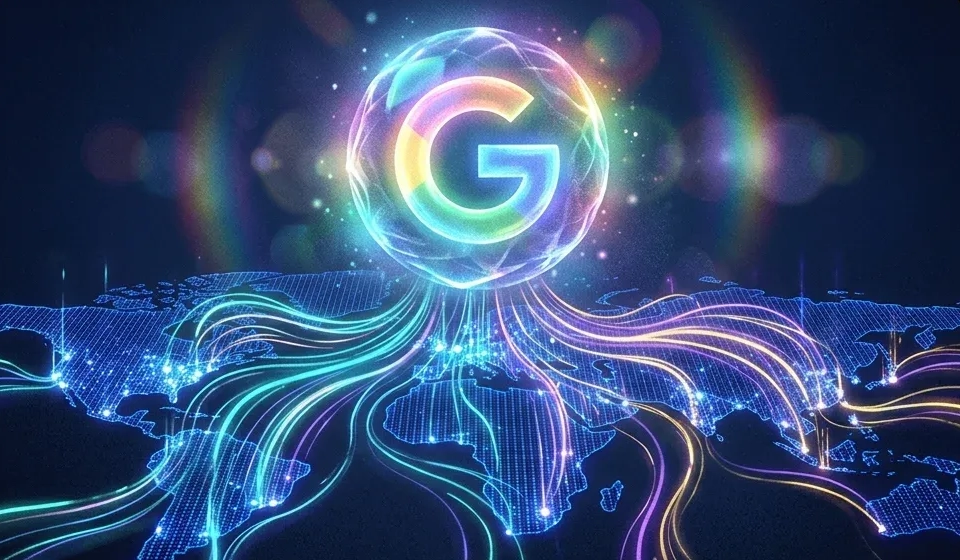
Have They Positioned Themselves Where We Cannot Live Without Them?

There’s a moment — usually sometime between waking up and the first sip of coffee — when we reach for our phones and tap the familiar multicoloured “G”. It’s almost unconscious. A reflex. A tiny ritual that has woven itself into the fabric of modern life. And it raises a question that’s been simmering for years: has Google positioned itself so deeply into our daily routines that we simply cannot live without them?
It’s a provocative thought, but one worth exploring. Because Google isn’t just a search engine anymore. It’s a digital ecosystem, a global infrastructure, a cultural touchstone, and in many ways, a quiet architect of how we navigate the world.
The Search Engine That Became the Operating System of Modern Life
Google Search is still the beating heart of the empire. It’s the place we go to settle arguments, diagnose symptoms, find recipes, check facts, stalk celebrities, and learn how to fix the washing machine. It’s the world’s collective memory — indexed, categorised, and served back to us in milliseconds.
But search is only the beginning.
Google has become the operating system of everyday life, even for people who don’t use Android. Think about it:
- Gmail is the world’s most widely used email service.
- Google Maps is the default navigation tool for billions.
- YouTube is the largest video platform on Earth.
- Chrome is the most popular browser.
- Google Photos quietly stores the memories of entire generations.
- Google Drive holds our documents, resumes, tax files, and creative projects.
- Google Calendar tells us where to be and when.
- Google Translate bridges languages in real time.
- Google Pay handles transactions.
- Google News shapes what we read.
- Google Search still answers every question we throw at it.
This isn’t a company. It’s a digital nervous system.
And once you’re plugged in, it’s very hard to unplug.
The Convenience Trap — And Why We Walk Into It Willingly

Google’s greatest achievement isn’t technological. It’s psychological.
They’ve made themselves irresistibly convenient.
Every product is designed to reduce friction. Every service is built to integrate seamlessly with the next. Every feature is engineered to anticipate what you need before you know you need it.
And convenience is addictive.
We don’t choose Google because we’re forced to. We choose Google because it’s easy. Because it works. Because it’s fast. Because it’s familiar. Because it’s everywhere.
The trap is velvet-lined, beautifully lit, and incredibly comfortable.
But it’s still a trap.
The Price of Ubiquity
Let’s be honest: Google’s business model is not a mystery. They collect data, analyse behaviour, personalise advertising, and monetise attention. They know what we search, where we go, what we watch, what we buy, and increasingly, what we say.
And we allow it.
Because the trade-off feels worth it.
We get free tools, free storage, free navigation, free entertainment, free translation, free email, free everything — in exchange for data that most people don’t think twice about.
But the question remains: is this a fair exchange, or have we become too dependent to walk away?
The Cultural Power of Google

Google isn’t just a tech company. It’s a cultural force.
It shapes language. (“Just Google it.”) It shapes learning. (Students rarely open textbooks first.) It shapes travel. (Maps, reviews, photos, routes.) It shapes entertainment. (YouTube is the new television.) It shapes business. (SEO determines visibility.) It shapes journalism. (News surfaces through algorithms.) It shapes advertising. (Google Ads is the backbone of digital marketing.) It shapes identity. (Search histories reveal who we are.)
Google has become the lens through which we view the world.
And when a single company becomes the lens, it also becomes the filter.
The Quiet Integration Into Every Industry
Google’s reach extends far beyond consumers.
- Schools rely on Google Classroom.
- Businesses rely on Workspace.
- Developers rely on Google Cloud.
- Advertisers rely on Google Ads.
- Creators rely on YouTube.
- Journalists rely on Google Trends.
- Travellers rely on Maps.
- Researchers rely on Scholar.
- Designers rely on Fonts.
- Podcasters rely on YouTube Music.
It’s not just that Google is everywhere — it’s that Google is in everything.
And that’s the real power move.
Have They Made Themselves Indispensable?

In many ways, yes.
Google has built an ecosystem so vast, so integrated, and so frictionless that stepping outside of it feels like stepping back in time. Alternatives exist — Apple, Microsoft, DuckDuckGo, Firefox, Dropbox — but none offer the same seamless, interconnected experience.
Google didn’t just build products. They built dependencies.
And they did it so elegantly that most people didn’t notice it happening.
But Here’s the Twist: We Still Have Agency
Dependency doesn’t mean captivity.
We can choose alternatives. We can limit data sharing. We can diversify our digital tools. We can be mindful of what we give away. We can decide how deeply we want to integrate.
Google may have positioned themselves as essential, but we’re not powerless. We’re participants. We’re collaborators. We’re beneficiaries. And we’re capable of stepping back and asking whether the convenience is worth the cost.
For many, it is. For some, it isn’t. For most, it’s complicated.
The Final Question
So, have Google positioned themselves where we cannot live without them?
Not entirely. But almost.
They’ve become the infrastructure of modern digital life — not because they forced themselves upon us, but because they built tools so good, so intuitive, and so omnipresent that opting out feels like opting out of the modern world itself.
Google didn’t make themselves indispensable.
We made them indispensable by choosing them again and again.
And that’s the real story.


Discover more from Archer Creative
Subscribe to get the latest posts sent to your email.